We are a proud member of the Housing Industry Association Limited (HIA)

Master Skills Australia uses Recognition of Prior Learning (RPL) to assess the skills you’ve already built on site. We help you choose the right qualification, build a clear evidence plan, review what you already have, and guide you through assessment without sending you back to the classroom.
The Master Skills Australia process is structured, supported, and evidence-based, so you know what happens at each stage and what is required to move forward.
A quick chat with an Industry Skills Advisor to find out if RPL works for you.
Enrol and meet with your Assessor to create an Assessment Plan together.
Work with your assessor through evidence process and assesses your skills for the qualification.
We review your assessments and evidence, and then issue the qualification outcome.
Your evidence does not have to be perfect, formal, or all in one place. For RPL, everyday records from real jobs can help show the skills, knowledge, and experience you have built over time.
Your assessor will help you identify what evidence is useful, what can be verified, and whether any gaps need to be covered.
We accept a wide range of evidence, including:
Having gaps in your evidence is a very common occurrence, particularly in trade-based roles where you are using your hands more than computers. However, there are several ways in which you can fill gaps, including:
Your assessor will recommend an activity best suited to the requirements of the unit of competency for which the gap in your evidence exists.

This course can open the door to a range of low-rise residential licensing opportunities.
View CourseEffective leaders are in demand nationally. This qualification is widely recognised as a key credential for professionals seeking to progress their career.
View CourseWHS professionals are in strong demand nationally. This qualification is widely recognised as a key certification for those responsible for managing workplace safety and compliance.
View CourseThis qualification supports professionals to transition from coordinating individual tasks to confidently managing projects and teams, timelines, and resources.
View CourseYou don’t need a long-winded pitch followed by crickets - you need a team of people who will back you from start to finish. Master Skills Australia is built around construction roles and site realities. If you give us a go, this is what you’ll get:

Success stories from our past students.
-2.avif)
Cooper Shaw
Project Manager, VIC

Avissa Dalla-Costa
WHS Officer, QLD

Lachlan Carmedy
Carpenter, NSW
Find out more about Master Skills Australia.
Recognition of Prior Learning, or RPL, is a way to have your existing skills, knowledge, and workplace experience assessed against a nationally recognised qualification. Instead of sitting through training for things you already know, you provide evidence from real work you have completed.
An assessor reviews that evidence against the required units of competency to determine whether you already meet the requirements of the qualification.
RPL is commonly used by experienced tradies, supervisors, builders, site managers, and business owners who have built their skills on the job but may not yet hold the formal qualification to match.
No. RPL is not the same as completing a course from the beginning. A standard course usually involves learning new material, completing lessons, attending classes, and submitting assessments as you go.
RPL is different because it focuses on assessing the skills and experience you already have. That means your assessor is looking at what you can already demonstrate through workplace evidence, conversations, verification, and practical examples. If you already have the required skills and knowledge, RPL can help you achieve the qualification without repeating training you do not need.
The best way to find out is to complete an eligibility check with Master Skills Australia. We will look at your trade background, work history, type of experience, level of responsibility, and the qualification you are interested in.
This helps us understand whether your experience is likely to match the requirements of the qualification. You do not need to know exactly what evidence you have before you enquire. Our team can help you work out what may be useful and whether RPL is the right option for you.
The evidence you need will depend on the qualification and the type of work you have done, but it can include a wide range of real workplace records.
Examples may include resumes, position descriptions, previous tickets, licences, qualifications, references, photos, videos, quotes, invoices, site diaries, SWMS or JSA documents, toolbox talks, emails, job records, plans, schedules, and other documents from real projects.
Your evidence does not need to be perfect or all in one place. Your assessor will help you identify what can be used, what may need to be verified, and whether any extra evidence is required.
That is very common, especially in trade-based roles where most of your experience happens on site rather than behind a desk. Not having a large folder of paperwork does not automatically mean you are not eligible.
Your assessor can help you look at other ways to demonstrate your skills and experience, including photos, videos, job examples, references, conversations, workplace verification, or practical evidence collected while you work. The important thing is whether your skills and experience can be properly assessed against the requirements of the qualification.
The timeframe depends on the qualification, the quality of your evidence, how quickly information is provided, and whether any gaps need to be addressed. For many students, the RPL process can be completed in a matter of weeks once suitable evidence has been provided and assessment can begin.
Some applications may take longer if additional evidence, verification, or assessment activity is required. Master Skills Australia will give you guidance on what isneeded and help keep the process moving as clearly and efficiently as possible.
Gaps in evidence are common. If your assessor identifies a gap, they will explain what is missing and what is needed to address it.
Depending on the unit of competency and the type of gap, this may involve providing additional workplace evidence, completing a competency conversation, arranging practical observation, obtaining third-party verification, or using a "Learn By Doing" checklist to help capture evidence while you work.
The aim is to give you a clear and practical way to demonstrate the required skills where appropriate, rather than leaving you guessing about what to do next.
We are all about giving a fair go so you’ll only pay a deposit of 30% on enrolment and then you only have to pay the balance (70%) if you are awarded the qualification.
Before you proceed, Master Skills Australia will explain the relevant fees. This means you can make an informed decision before starting the formal assessment process.
If you are unsure, speak with our team during your eligibility check and we will walk you through the payment process clearly.
A nationally recognised qualification may support a builder’s licence or registration application, depending on your state or territory and the requirements of the relevant licensing authority.
However, licensing is separate from the qualification process. Each regulator sets its own rules and may require additional evidence, experience, exams, references, insurance, business documents, or other criteria.
Master Skills Australia can help you understand the qualification and RPL process, but licensing decisions are made by the relevant authority. We recommend checking the current requirements with your state or territory regulator before applying.
After you enquire, Master Skills Australia will contact you to learn more about your experience, goals, and the qualification you are interested in.
From there, we will help check your suitability, explain the RPL process, and guide you on the type of evidence that may be required. If RPL looks like the right fit, you will receive clear next steps, so you know what to provide, what happens during assessment, and how to move forward.
The process is designed to be practical, straightforward, and supported from start to finish.
We’re keen to answer all your questions. Here are a few ways to get in touch








Talk to an Industry Skills Advisor about your options




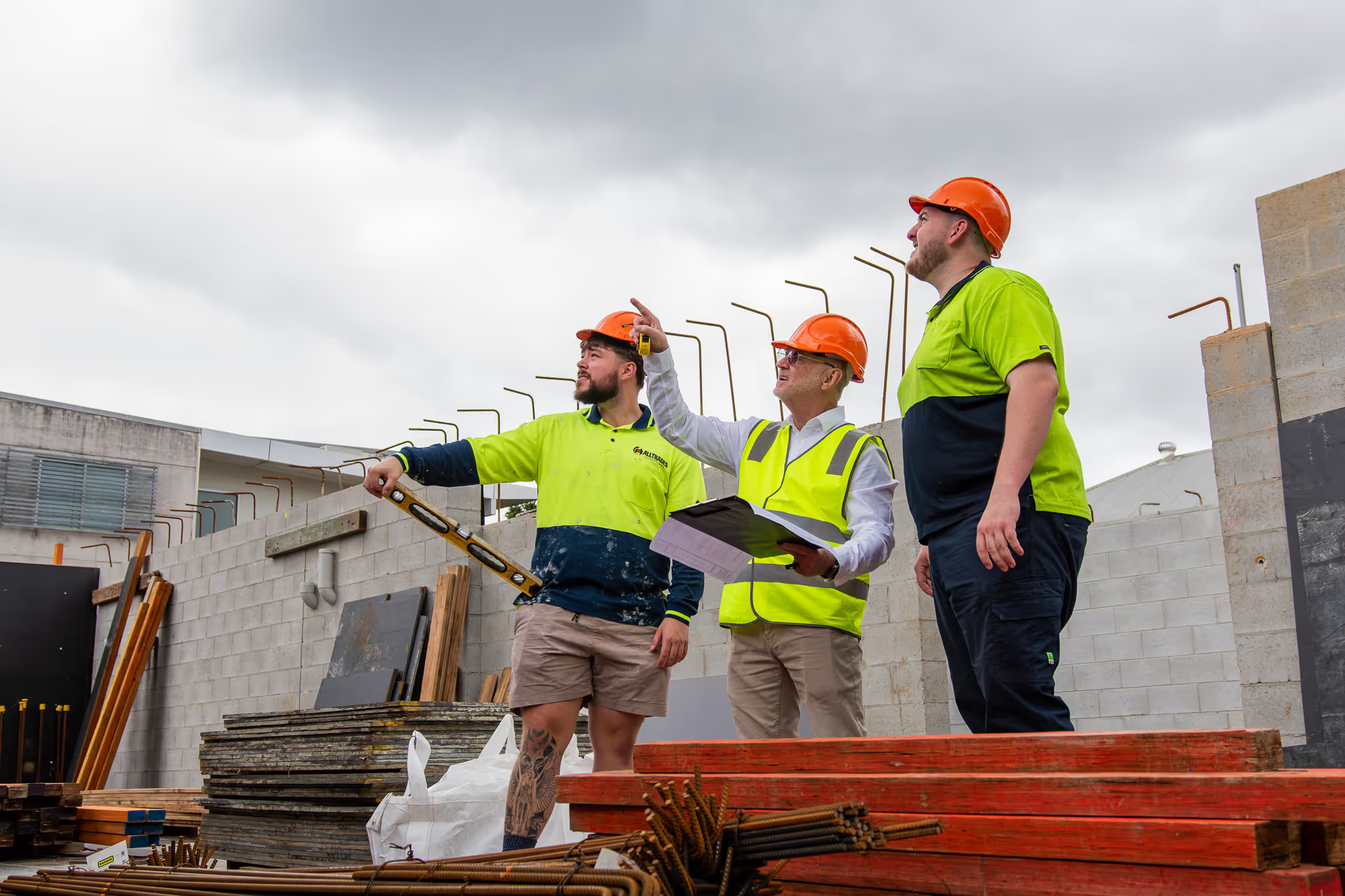
Nationally recognised qualifications you may be able to attain through Recognition of Prior Learning. Tap any qualification to see the units, outcomes and fees.
This course can open the door to a range of low-rise residential licensing opportunities.
Effective leaders are in demand nationally. This qualification is widely recognised as a key credential for professionals seeking to progress their career.
WHS professionals are in strong demand nationally. This qualification is widely recognised as a key certification for those responsible for managing workplace safety and compliance.
This qualification supports professionals to transition from coordinating individual tasks to confidently managing projects and teams, timelines, and resources.