We are a proud member of the Housing Industry Association Limited (HIA)

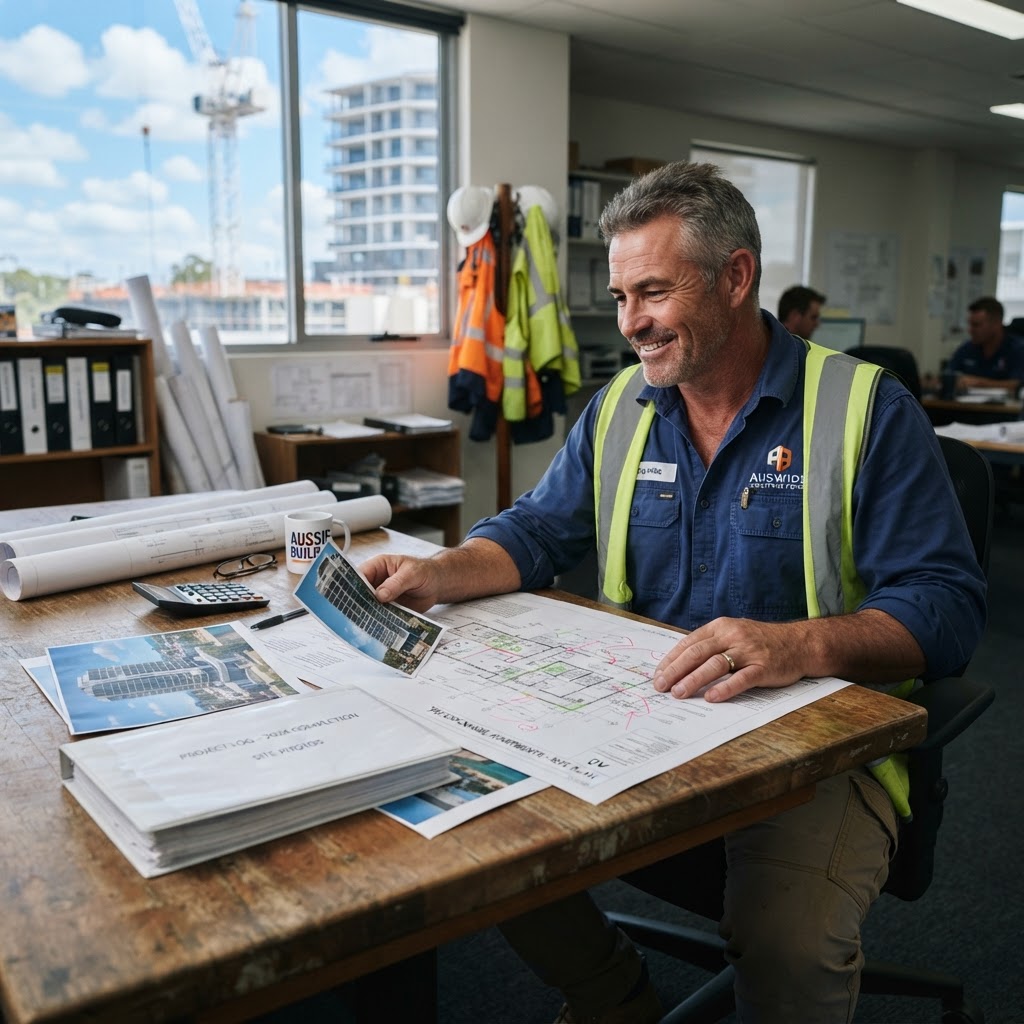
You've built things. Real things. Houses, extensions, renovations, complex builds that took months and required serious problem-solving. Your experience is actually worth a qualification — you just need a way to prove it formally.
That's exactly what RPL (Recognition of Prior Learning) does. It's a formal pathway where an assessor looks at your actual work history and experience, compares it against the national competency standards for a qualification, and if it stacks up, you get the qualification without sitting in a classroom.
But here's the thing most tradies don't realise: RPL isn't a shortcut or a loophole. It's the way the VET system was designed to recognise people like you who already know the job inside out.
Instead of completing coursework and assignments, you gather evidence of your experience. That evidence might include photos of completed projects, references from clients or supervisors, contracts you've worked on, safety records, project reports — whatever demonstrates that you've been doing the actual work the qualification requires.
You then meet with a qualified RPL assessor who reviews your evidence against the national competency standards for the qualification you're going for. They might ask you questions to clarify your experience or discuss how you've handled specific situations. The goal is simple: do you actually have the skills and knowledge this qualification describes?
If you do, you get the qualification. If there are gaps, they tell you clearly what's needed — maybe you need to demonstrate knowledge in a specific area, or you might only qualify for partial credit toward the full qualification.
The evidence doesn't have to be fancy or formal. It just has to be real. Here's what typically counts:
The key is that the evidence needs to demonstrate you've actually done the work, not just attended training or read about it.

RPL timelines vary depending on how much evidence you already have and how complex the qualification is. Generally speaking:
Compare that to a full classroom course, which can take 12–18 months. Even if your RPL takes longer because you're gathering evidence, you're still looking at a significantly faster pathway.
"In Australia, about 1 in 4 VET qualification completions now happen through RPL or credit transfer — because experienced workers like you don't need to repeat what they already know." — NCVER Australian VET Statistics
There's another benefit a lot of tradies don't think about: RPL qualifications carry the exact same weight as qualifications gained through traditional study. There's no asterisk on your certificate saying it came from RPL. A CPC40120 Certificate IV in Building and Construction is a CPC40120, whether you got it through classroom study or through demonstrating your existing experience.
That means when you're applying for licensed builder roles, applying to bigger companies, or tendering for contracts, your qualification is viewed exactly the same way.
Not everyone has perfectly documented evidence from day one. If you're missing some of the paperwork from earlier jobs, that's okay. A good RPL assessor understands that tradies don't necessarily keep records the way corporate workers do. What matters is that you can demonstrate the skills and knowledge, even if some of the documentation isn't pristine.
That might mean combining written reflections, client references, and conversations with your assessor to build a clear picture of your competence. You don't need to be perfect — you just need to show you actually know how to do the job.
MSA specialises in RPL assessments for tradies with real experience. No classrooms. No fluff. Just a straightforward conversation about what you already know.
Start Your RPL Journey →Talk to an Industry Skills Advisor about your options
Talk to an Industry Skills Advisor about your options